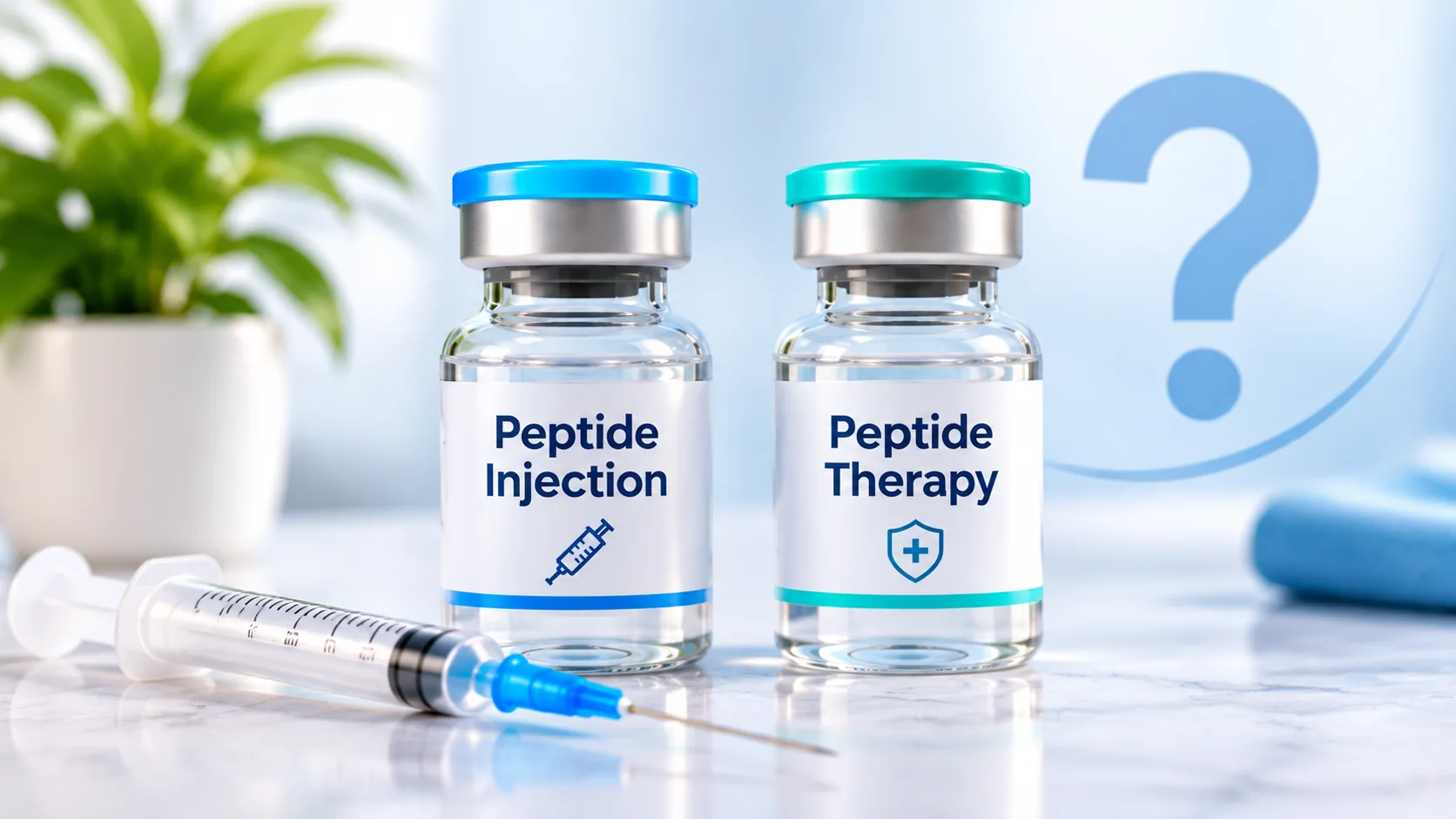
Peptide Injection vs Peptide Therapy: What’s the Difference?

Peptide injection vs peptide therapy: The main difference is that a peptide injection describes how a medicine is delivered, while peptide therapy describes the treatment itself.

The two terms are often used interchangeably, especially in discussions about weight management and wellness. But they are not identical, and understanding the distinction can help patients ask better questions about a proposed treatment.

For readers in Qatar, there is another important consideration: the regulatory status of the specific medicine. Not every product advertised as a peptide treatment is authorized for medical use.

What Are Peptides?

Peptides are chains of amino acids, the building blocks of proteins. Many naturally occurring peptides help regulate functions such as appetite, blood glucose, and hormone signaling.

Some medicines use peptides or act on peptide-related pathways. These include established treatments for certain medical conditions.

However, the word peptide is also used to market experimental substances for recovery, anti-aging, and performance enhancement. Being described as a peptide does not establish that a product is safe, effective, or approved for human use.

What Is a Peptide Injection?

A peptide injection is a method of administering a medicine containing a peptide or peptide-related active ingredient.

Depending on the product, the medicine may be injected under the skin or administered by another approved route.

Examples of peptide-based or peptide-related injectable medicines include:

  • Insulin: Used in the management of diabetes.
  • Semaglutide: A GLP-1 receptor agonist used in certain prescription medicines.
  • Tirzepatide: A medicine that acts on GIP and GLP-1 receptors and has specific approved medical indications in some countries.

These examples explain the category; they do not establish that every formulation, brand, or indication is authorized in Qatar.

An injection is simply the delivery method. It does not, by itself, tell you whether a medicine is suitable for a patient.

What Is Peptide Therapy?

Peptide therapy is a broad term for treatment involving peptides or peptide-related medicines.

In evidence-based medical care, treatment is selected for a specific clinical reason. A healthcare professional considers the patient’s diagnosis, medical history, contraindications, expected benefits, and potential risks.

The term does not necessarily mean an injection. Some peptide-related medicines have approved oral formulations.

It is also important to recognize that peptide therapy is not a single standardized treatment. Two services advertised under this name may involve entirely different substances, purposes, and levels of scientific evidence.

Patients should therefore ask which exact medicine is being proposed rather than relying on the general label.

Peptide Injection vs Peptide Therapy: Key Differences

FeaturePeptide InjectionPeptide Therapy
MeaningA method of delivering a medicineA broader term describing treatment
Main questionHow is the medicine administered?Why is the medicine being used?
AdministrationInvolves an injectionMay involve injections or other formulations
Medical purposeDepends on the medicine being injectedDepends on the condition and treatment plan
Safety assessmentRequires product-specific precautionsRequires evaluation of the overall treatment
Regulatory statusThe injectable product must meet applicable requirementsThe medicine and associated healthcare services must meet applicable requirements

In simple terms: An injection is a way to give a medicine. Therapy is the treatment being provided.

For example, a patient might receive an injectable prescription medicine as part of a broader treatment plan that includes medical assessment, monitoring, and follow-up.

What Are Peptide-Based Medicines Used For?

Peptide-based and peptide-related medicines have several established medical applications. Their uses depend on the specific product and its approved indications.

Diabetes Management

Insulin is a well-established example of a peptide hormone used as a medicine.

Other medicines acting on hormone-related pathways may also be prescribed for eligible patients with type 2 diabetes.

The choice of treatment depends on the patient’s condition and medical needs.

Weight Management

Certain prescription medicines acting on GLP-1 or related pathways are used for weight management in patients who meet defined clinical criteria.

These medicines are not appropriate for everyone. Their benefits, adverse effects, contraindications, and approved uses vary by product.

Approval in one country does not automatically establish approval in Qatar.

Other Medical Conditions

Peptide-related medicines are also used in selected hormonal and other medical conditions.

This does not mean that all products marketed as peptide therapy have proven medical benefits. Each substance must be assessed individually.

What About Peptides Marketed for Recovery or Anti-Aging?

Online advertisements sometimes describe peptides as treatments for faster recovery, tissue repair, improved performance, or reversing aging.

Such claims need careful examination.

A laboratory finding, animal study, or early-stage clinical trial does not establish that a product is safe and effective for routine human treatment.

Patients should distinguish between an appropriately authorized medicine with supporting clinical evidence and an investigational substance being marketed beyond the available evidence.

Are Peptide Injections and Peptide Therapy Legal in Qatar?

The answer depends on the exact product and its regulatory authorization.

In August 2026, Qatar’s Ministry of Public Health (MoPH), through its Pharmacy and Drug Control Department, announced restrictions on unlicensed peptide preparations.

The reported directive prohibits activities involving peptide preparations that have not received the required licensing, including importation, trading, prescribing, dispensing, administration, use, advertising, and promotion.

Examples identified in the announcement included BPC-157, retatrutide, and MOTS-c.

The restrictions also address preparations marketed as being for research purposes when they are intended, used, or promoted for human use without the required authorization.

This should not be interpreted as a blanket prohibition on every established peptide-based prescription medicine. The regulatory status of each product must be checked individually.

Patients should confirm the status of a specific medicine with the relevant Qatar authorities and use appropriately licensed healthcare channels.

Further reading: Are Peptides Legal in Qatar?

What Are the Possible Side Effects of Peptide Injections?

Side effects vary considerably between medicines. There is no single safety profile that applies to every peptide injection.

Depending on the product, possible concerns may include:

  • Pain, redness, or irritation at the injection site
  • Nausea or digestive symptoms
  • Allergic reactions
  • Medicine-specific contraindications or interactions
  • Problems caused by incorrect dosing or administration

Some medicines have additional serious warnings that are not captured by this general list.

Unlicensed or improperly sourced injectable products may also raise concerns about identity, purity, sterility, and dose accuracy.

Patients should review the official product information and discuss relevant risks with a qualified healthcare professional before starting a prescribed treatment.

Further reading: Peptide Therapy Side Effects: What Patients Should Know

Five Questions Patients in Qatar Should Ask

Before considering a peptide-based treatment, ask these five questions.

1. What is the exact medicine?

Request the generic name, formulation, and intended medical use. A broad label such as peptide injection is not enough to assess a treatment.

2. Is it authorized for the intended use in Qatar?

Check the product’s current regulatory status through the appropriate Qatar authorities. Do not rely solely on international marketing claims.

3. Why is this treatment being recommended?

A healthcare professional should be able to explain the clinical indication, expected benefits, alternatives, and limitations.

4. What are the risks?

Ask about contraindications, adverse effects, interactions, and any monitoring required.

5. Who is responsible for prescribing and supplying it?

Confirm that the professionals, facilities, and supply channels involved have the necessary authorization.

These questions are especially relevant when a product is advertised through social media or offered through an overseas provider.

Understanding Peptide Therapy in Qatar

People researching peptide injections in Doha or elsewhere in Qatar may encounter both established prescription medicines and experimental products advertised under similar names.

The most useful starting point is to identify the specific substance, understand its evidence base, and verify its regulatory status.

For additional educational information and Qatar-specific considerations, visit our Peptide Therapy in Qatar page.

This link is provided for general information and does not establish that any particular medicine or service is authorized, available, or suitable for use in Qatar.

Frequently Asked Questions

Is peptide therapy the same as peptide injections?

No. A peptide injection is a method of administering a medicine. Peptide therapy is a broader description of treatment involving peptides or peptide-related medicines.

Are all peptide treatments injectable?

No. Some peptide-related medicines have oral formulations. The available route depends on the specific product and its approved instructions.

Are peptide injections safe?

Safety depends on the exact medicine, its clinical use, the patient’s health, product quality, and appropriate medical supervision. No peptide injection should be assumed safe solely because it is described as a peptide.

Can I buy peptide injections online in Qatar?

An online listing does not establish that a product or seller is authorized. Qatar restricts unlicensed peptide preparations, including their sale and promotion. Patients should verify the medicine and supply channel before considering any purchase.

Do peptide injections require a prescription?

Many established injectable peptide-related medicines are prescription-only. Requirements depend on the particular product and applicable Qatar regulations.

Is an experimental peptide the same as an approved medicine?

No. An experimental substance may still be undergoing research or may lack the authorization required for routine medical use. Its advertised benefits should not be treated as established clinical outcomes.

Final Thoughts

The difference between peptide injections and peptide therapy is straightforward: one describes the method of administration; the other describes the treatment.

The more important question is whether the specific medicine has a sound medical purpose, adequate supporting evidence, and the required regulatory authorization.

For patients in Qatar, checking these details is essential before considering any peptide-based treatment.


References

  1. Qatar Ministry of Public Health announcement reported by The Peninsula, 27 August 2026
  2. Qatar Government — Registration of a Pharmaceutical Product
  3. US National Institute of Diabetes and Digestive and Kidney Diseases — Prescription Medications to Treat Overweight & Obesity
  4. US FDA — Dosing Errors Associated With Compounded Injectable Semaglutide

Medical disclaimer: This article provides general educational information and is not a substitute for personalized medical advice. Drug approvals, regulatory restrictions, and prescribing requirements can change. Patients should confirm current requirements with the appropriate authorities and qualified healthcare professionals.
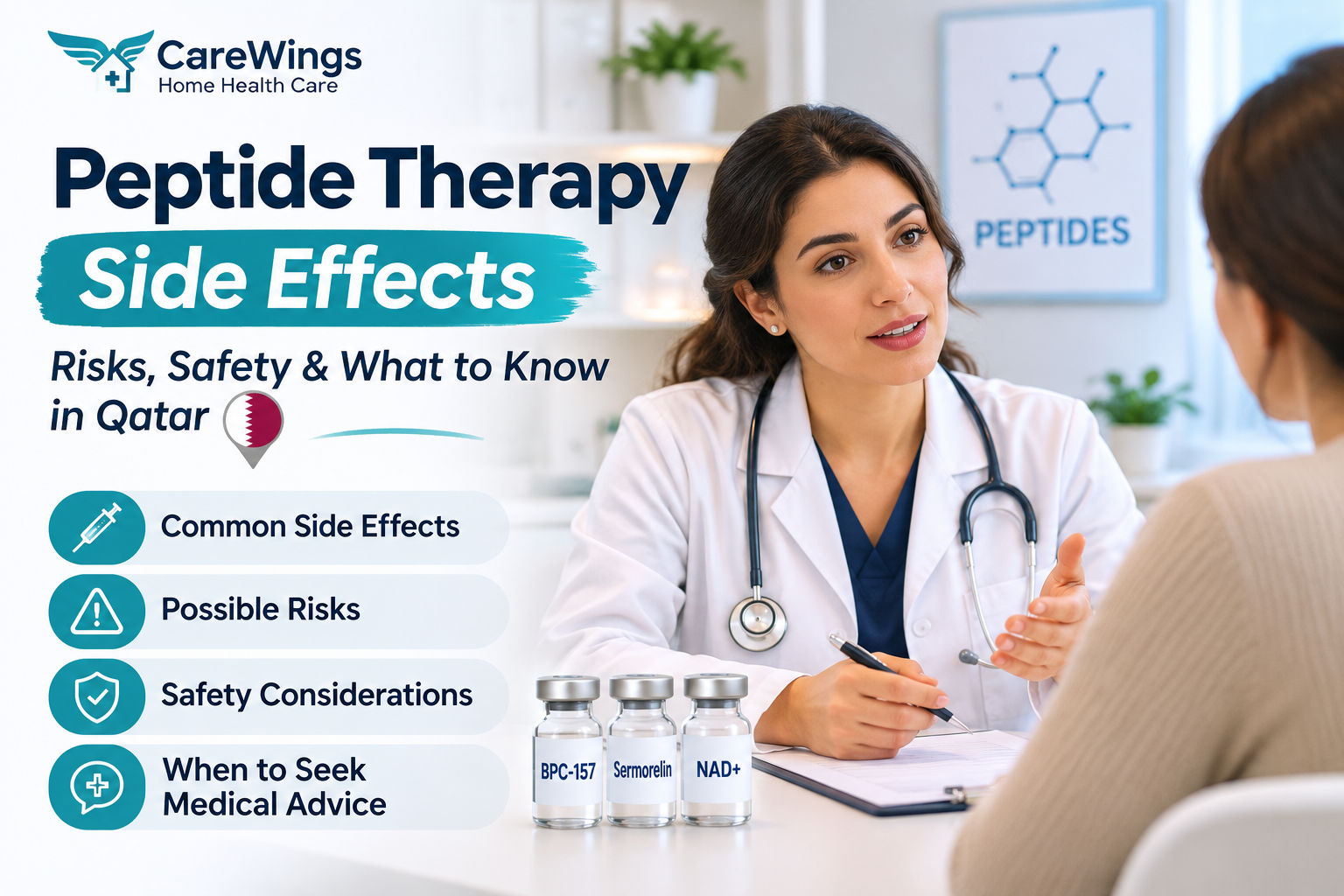

Peptide Therapy Side Effects: Risks, Safety & What to Know in Qatar

Peptide therapy has attracted growing attention in health and wellness discussions. However, before considering any peptide-based treatment, it is important to understand its potential side effects, the quality of available medical evidence, and the regulations that apply in Qatar.

Not all peptides are the same. Some peptide-based medicines have established medical uses, while others remain experimental, lack adequate human safety data, or are not authorised for medical use.

This guide explains peptide therapy side effects, possible injection risks, long-term safety concerns, and important regulatory considerations for people in Qatar.

Key Takeaways

  • Peptide side effects vary significantly depending on the specific substance, dose, route of administration, and individual medical history.
  • Possible reactions to injectable products include redness, swelling, pain, and infection at the injection site.
  • Some peptide-based medicines can cause digestive symptoms or other effects specific to the medication.
  • Experimental peptides may have insufficient human research to establish their safety and effectiveness.
  • Qatar prohibits the use and promotion of unlicensed peptide preparations, including products specifically identified in its August 2026 regulatory warning.

What Is Peptide Therapy?

Peptides are short chains of amino acids that perform many different functions in the human body. Some act as signalling molecules and participate in processes such as hormone regulation, metabolism, and cellular communication.

In healthcare, certain peptide-based substances are used as medicines for specific medical conditions. These products undergo regulatory assessment and must be used according to their approved indications.

However, the term peptide therapy is also used in online marketing to describe experimental products promoted for recovery, weight management, anti-aging, and performance enhancement.

A peptide being discussed online does not mean it is medically approved, effective, or safe for human use.

For patients in Qatar, understanding the difference between authorised medicines and unlicensed preparations is especially important.

What Are the Possible Side Effects of Peptide Therapy?

There is no single side-effect profile that applies to every peptide.

The risks depend on the specific product, how it works, how it is administered, and the patient’s health.

1. Injection-Site Reactions

When a medicine is administered by injection, possible local reactions may include:

  • Redness or tenderness
  • Mild swelling
  • Bruising
  • Itching or irritation
  • Pain at the injection site

Improper injection techniques, contaminated products, or unsafe handling can increase the risk of infection and other complications.

Persistent pain, spreading redness, fever, or significant swelling should be assessed by a healthcare professional.

2. Nausea and Digestive Symptoms

Some peptide-based medications, particularly those that affect metabolic or gastrointestinal pathways, may cause digestive side effects.

Depending on the specific medicine, these can include nausea, vomiting, diarrhoea, constipation, or abdominal discomfort.

These effects should not be assumed to occur with every peptide. Each medication has its own established or suspected safety profile.

3. Allergic Reactions

As with many medicines, allergic or immune-related reactions are possible.

Warning signs may include:

  • Rash or hives
  • Unusual itching
  • Swelling of the face or lips
  • Difficulty breathing

Difficulty breathing, throat swelling, or signs of a severe allergic reaction require immediate emergency medical attention.

4. Hormonal and Metabolic Effects

Some peptide-based medicines influence hormones, appetite, blood glucose, or other biological pathways.

Depending on the product, potential concerns may include changes in blood sugar, interactions with existing medicines, or effects that require clinical monitoring.

People with diabetes, endocrine conditions, or other chronic illnesses should not begin a peptide-based treatment without an appropriate medical assessment.

5. Product Quality and Contamination Risks

An important safety concern is the quality of the product itself.

Unlicensed preparations purchased through unofficial websites or social media sellers may have uncertain ingredients, purity, storage conditions, or concentrations.

A label claiming that a substance is intended for research does not establish that it is suitable for human use.

Patients should obtain medicines only through lawful, regulated healthcare channels.

Are Peptide Side Effects Different for Everyone?

Yes. Individual risk can vary according to several factors.

The specific medicine: Different peptides act on different biological pathways.

Medical history: Existing health conditions may influence whether a medicine is suitable.

Other medications: Drug interactions or overlapping effects may increase risks.

Dose and administration: Incorrect dosing or unsafe administration can create additional complications.

Product quality: Unverified preparations may expose patients to risks beyond those associated with the intended substance.

For these reasons, safety decisions must be based on the actual product and the patient’s individual circumstances, not broad online claims about peptide therapy.

Are There Long-Term Side Effects of Peptide Therapy?

Long-term safety is one of the most important questions to consider.

For an authorised medicine, the available evidence may include clinical trials, regulatory safety assessments, and ongoing monitoring after approval.

For an experimental peptide, reliable long-term human safety information may be limited or unavailable.

This means that the absence of reported side effects should not be interpreted as proof that a substance is safe.

Potential uncertainties may involve immune reactions, effects on hormone signalling, interactions with other medicines, or consequences that have not yet been adequately studied.

Experimental peptides should not be treated as proven long-term wellness or anti-aging solutions.

Are All Peptides Allowed in Qatar?

No. Regulatory authorisation depends on the specific medicinal product.

In August 2026, Qatar’s Ministry of Public Health, through its Pharmacy and Drug Control Department, issued a warning concerning unlicensed peptide preparations.

The Ministry specifically identified BPC-157, Retatrutide, and MOTS-c among products being circulated or promoted without the required regulatory authorisation.

According to the Ministry’s directive, the cited preparations were not licensed for human medical use in Qatar at the time of the warning.

The directive prohibits the importation, manufacture, preparation, trading, prescription, dispensing, injection, use, advertising, and promotion of peptide preparations that have not been licensed by the relevant department.

The restriction also applies to unlicensed products marketed as research use only or not for human use when they are used or promoted for human use.

This warning does not mean that every peptide-based medicine is prohibited in Qatar. The regulatory status of each individual product must be verified.

For additional context, read our guide:

Are Peptides Legal in Qatar? Understanding the Regulations

Why Are Experimental Peptides a Safety Concern?

Experimental substances may appear in online discussions before sufficient clinical evidence is available.

A substance may show promising results in laboratory or animal research but still lack reliable evidence of safety or effectiveness in humans.

For example, the US Food and Drug Administration has identified concerns relating to compounded preparations containing BPC-157, including limited safety information and potential immune-related risks.

These concerns highlight why laboratory findings, marketing testimonials, and online recommendations are not substitutes for properly conducted human clinical trials.

For readers in Qatar, experimental products should not be confused with medicines that have received the necessary local regulatory approval.

How Can Patients Reduce Medication-Related Risks?

The safest approach is to focus on verified medical information and regulated healthcare.

Check the Product’s Regulatory Status

Before considering any medication, confirm that the specific product is authorised for its intended use in Qatar.

Consult a Qualified Healthcare Professional

A clinician can review your symptoms, medical history, existing medications, and available treatment options.

Avoid Unverified Online Sellers

Do not rely on social media advertisements, informal suppliers, or unsupported claims about product safety.

Ask About Known and Unknown Risks

An informed decision requires understanding both documented side effects and areas where scientific evidence remains limited.

Seek Medical Attention for Concerning Symptoms

If you experience a severe allergic reaction, breathing difficulty, or other serious symptoms after taking a medicine, seek urgent medical care.

Questions to Ask Before Considering a Peptide-Based Medicine

Before making any treatment decision, consider asking your healthcare professional:

  1. What is the exact name of the medicine?
  2. Is this product authorised for medical use in Qatar?
  3. What condition is it approved to treat?
  4. What clinical evidence supports its use?
  5. What are its known side effects and contraindications?
  6. Could it interact with my existing medications?
  7. What monitoring or follow-up would be required?
  8. Are there established, authorised alternatives?

These questions help distinguish evidence-based medical care from unsupported wellness marketing.

Frequently Asked Questions

What are the most common peptide therapy side effects?

There is no universal list because different peptide-based medicines have different effects. Depending on the product, possible side effects may include injection-site reactions, nausea, digestive discomfort, or other medicine-specific reactions.

Can peptide injections cause allergic reactions?

Yes. Injectable medicines can potentially cause allergic reactions. Severe symptoms, including difficulty breathing or throat swelling, require emergency medical attention.

Are peptide therapies safe for long-term use?

Long-term safety depends on the individual medicine and the available clinical evidence. Some authorised medications have established safety information, while experimental peptides may lack sufficient long-term human studies.

Is BPC-157 approved for medical use in Qatar?

Qatar’s Ministry of Public Health identified BPC-157 among unlicensed peptide preparations in its August 2026 warning. The Ministry prohibited the use and promotion of peptide preparations without the required authorisation. Patients should check current regulatory information before making any treatment decision.

Are all peptide medicines banned in Qatar?

No. Qatar’s restrictions concern unlicensed peptide preparations. The approval status of each specific medicine must be checked with the appropriate regulatory authority.

Should I use peptides advertised on social media?

Do not assume that a product advertised online is authorised, safe, or effective. Verify its regulatory status and discuss appropriate medical options with a qualified healthcare professional.

Making Informed Healthcare Decisions in Qatar

Peptide-based medicines and experimental peptides should not be treated as interchangeable.

Some medicines have established clinical uses, while other substances remain under investigation or lack the necessary regulatory approval.

Understanding potential side effects, long-term uncertainties, and Qatar’s medication regulations is essential before considering any treatment.

CareWings Home Health Care encourages patients to seek qualified medical guidance, rely on credible evidence, and prioritise treatments that comply with applicable healthcare regulations.

For general information about medical guidance and peptide-related safety considerations, visit our Peptide Therapy Information for Qatar page.

This link is for educational information and does not indicate that CareWings supplies, prescribes, administers, or arranges access to unlicensed peptide products in Qatar.

Medical Disclaimer

This article is intended for general educational purposes only. It is not a substitute for professional medical advice, diagnosis, or treatment.

The mention of an experimental or unlicensed peptide does not constitute an endorsement, recommendation, or offer of treatment.

Medicine approval status and regulations may change. Patients should consult Qatar’s Ministry of Public Health and appropriately licensed healthcare professionals for current information.

References and Further Reading

  1. Qatar Ministry of Public Health regulatory warning, August 2026 — Coverage of the Ministry’s directive on unlicensed peptides, Al Sharq
  2. Qatar regulatory guidance — The Peninsula: Qatar’s Health Ministry bans trading, use or promotion of unlicensed peptide products
  3. US Food and Drug Administration — Certain Bulk Drug Substances for Use in Compounding That May Present Significant Safety Risks

Are Peptides Legal in Qatar? What You Need to Know in 2026

Are peptides legal in Qatar? Some peptide-based prescription medicines may be permitted, but unlicensed peptide products are prohibited. Whether a particular medicine can be used or supplied depends on its approval by Qatar’s Ministry of Public Health (MoPH).

This distinction matters if you’ve been researching peptide injections for weight management, recovery, skin health or general wellness. A product advertised online isn’t necessarily approved for treatment in Doha or elsewhere in Qatar.

What Are Qatar’s Rules on Peptides?

In August 2026, Qatar’s Ministry of Public Health announced restrictions on peptide preparations that had not received the required approval for human medical use.

The restrictions cover importing, manufacturing, selling, prescribing, dispensing, injecting, using and promoting unlicensed peptide products.

According to The Peninsula Qatar, the Ministry warned that these products could put patients at risk because their safety and effectiveness for the advertised uses had not been adequately established.

The rules apply to healthcare providers, sellers and individuals—not just commercial suppliers.

Which Peptides Are Restricted in Qatar?

The Ministry specifically identified several unlicensed compounds:

BPC-157: Commonly advertised for muscle recovery and tissue repair. However, reliable human evidence supporting these claims remains limited.

Retatrutide: An investigational medicine being studied for weight management. It has not received Qatar’s approval for routine medical use.

MOTS-c: An experimental peptide being researched for metabolic effects. It was also named in the Ministry’s warning.

This is not a complete list. Other peptide preparations may be restricted if they lack the required authorisation.

Are Peptides Legal in Qatar for Medical Treatment?

Not every medicine containing a peptide-based ingredient is prohibited.

Certain prescription medicines may be available through authorised healthcare channels when they have the necessary regulatory approval.

However, there is an important difference between a registered medicine and an experimental peptide marketed for anti-aging, fitness or recovery.

Before considering any treatment, ask for the medicine’s exact name, manufacturer and Qatar registration status. Approval in another country does not automatically establish approval in Qatar.

Can You Buy or Import Peptides Into Qatar?

Suppose you find a peptide product on an overseas website offering delivery to Doha. The website may describe it as a research product or advertise potential health benefits.

That doesn’t establish whether importing or using it is legal.

Qatar’s restrictions also cover products labelled “for research purposes only” or “not for human use” when they are promoted or used for human treatment.

Before ordering a medicine from abroad, check the applicable requirements with Qatar’s Ministry of Public Health.

How Can You Check Whether a Peptide Medicine Is Approved?

If you’re considering peptide treatment in Qatar, start by asking these questions:

  • What is the exact name and active ingredient of the medicine?
  • Is the product registered for the intended use in Qatar?
  • Is the prescribing healthcare professional appropriately licensed?
  • What medical evidence supports the treatment?
  • What side effects and follow-up care should you expect?

You can also contact Qatar’s Ministry of Public Health for guidance about pharmaceutical products.

For information about the medical assessment process, visit our peptide therapy consultation in Qatar page.

Are peptides allowed in Qatar?

Some registered peptide-based medicines may be permitted for approved medical uses. Unlicensed peptide preparations are prohibited.

Is BPC-157 legal in Qatar?

BPC-157 was specifically named in Qatar’s August 2026 warning about unlicensed peptide products.

Can I order research peptides online in Qatar?

An online listing or research-use label doesn’t establish legal permission to import or use a peptide for human treatment.

Can I bring peptides into Qatar while travelling?

Import requirements depend on the specific medicine and its regulatory status. Check with Qatar’s authorities before travelling with peptide products.

Does a doctor’s prescription make any peptide legal?

No. A prescription does not replace the regulatory authorisation required for a medicine.

Can I get a peptide therapy consultation in Doha?

Patients should seek advice from appropriately authorised healthcare professionals. Any treatment or medicine delivery must comply with Qatar’s applicable regulations.

Have Questions About Peptide Therapy in Qatar?

CareWings offers a free initial online consultation for people who want to understand peptide-related medical options.
Any treatment or product delivery is subject to medical assessment, the medicine’s regulatory status and the required Qatar healthcare authorisations.

Explore Peptide Therapy Consultation in Qatar

Ready to Experience Quality
Healthcare at Home?

Our team is available 24/7 to serve you and your family

Available on WhatsApp · Quick Response · All Dubai Areas